Event 1
Rose’s first consultation at Gómez’s clinic

[Rose Papastergiadis](entity:character-recall-character-rose-papastergiadis-318ee23605d9)’s first consultation at the [Gómez Clinic](entity:organization-recall-organization-g-mez-clinic-c9e2f9a39d29) brings a long, uncertain search for an explanation of her illness into a new clinical setting. The visit is a turning point not because it produces a settled diagnosis, but because it makes the practical and emotional stakes visible: Rose Papastergiadis’s treatment has required the remortgaging of her home, [Sofia Papastergiadis](entity:character-recall-character-sofia-papastergiadi-45252dcd4f4e) has made a vocation of reading her mother’s symptoms, and [Dr Gómez](entity:character-recall-character-dr-g-mez-9725c8236a4f) begins to question how care and medication have organized both their lives.
## Journey to the clinic
The journey to the clinic near [Carboneras](entity:location-recall-location-17ce0cb58d2c) follows years in which doctors in the [United Kingdom](entity:location-recall-location-cc30c45755f2) had been unable to explain Rose Papastergiadis’s changing symptoms. The family has remortgaged her house to pay for treatment: the total cost is twenty-five thousand euros. For Sofia Papastergiadis, this is not an isolated medical decision but the latest stage in an investigation she has been conducting for about twenty years, nearly as long as she can remember. As a child of four, she asked what a headache meant and was told it felt like a door slamming inside Rose Papastergiadis’s head. Since then, Sofia Papastergiadis has learned to read the symptoms as if her mother’s head were her own, and she casts herself as an unwilling detective trying to discover the cause of an illness that repeatedly produces new pains and new prescriptions. Even antidepressants prescribed in Britain for the nerve endings in Rose Papastergiadis’s feet become part of a puzzle that has not yielded a dependable answer.
The journey also takes place amid immediate discomfort and uncertainty. The taxi’s air conditioning makes the desert heat feel like a Russian winter, and Sofia Papastergiadis asks for it to be turned down. Her shoulder is still sore from a jellyfish sting sustained the previous day. Rose Papastergiadis rests her head on that shoulder, and Sofia Papastergiadis resists shifting away because she knows her mother is frightened and feels obliged to conceal her own fear. The care on display is physical and ordinary—offering a shoulder, enduring pain, keeping pace—before either woman enters the clinic.
The setting intensifies the sense of a last resort. The taxi passes through palm-fringed grounds advertised as a small ecological oasis, where two pigeons shelter beneath mimosa trees, before reaching the cream-coloured marble dome built into the scorched mountainside. Its curved form and glass entrance had seemed less reassuring in online images than they do in person. The walk from the taxi to the doors takes fourteen minutes. When the receptionist calls for Rose Papastergiadis, Sofia Papastergiadis takes her arm and they limp together across the marble floor. Sofia Papastergiadis describes this shared pace as a way of moving forward: her legs become her mother’s legs. The contrast is sharp because Rose Papastergiadis had walked alone to a local Spar that morning to buy hairpins, without even taking a walking stick. The clinic’s nurse then takes over, pushing Rose Papastergiadis in a wheelchair while Sofia Papastergiadis follows. The relief of handing care to someone else sits beside the sight of another, easier kind of walking, unburdened by pain or family obligation.
## Examination and the search for a pattern
The consultation carries the weight of a final journey. For years, an increasing number of medical professionals in the United Kingdom had struggled to diagnose Rose Papastergiadis; the trip to southern [Spain](entity:location-recall-location-0fe76f866976) therefore feels to Sofia Papastergiadis like a pilgrimage and a last chance. Dr Gómez, an orthopaedic consultant whom Sofia Papastergiadis has researched for months, receives them in a pinstriped suit, with silver hair marked by a striking white streak. The clinical encounter begins in a room reached through the clinic’s curved corridors, but its terms are not yet clear: the family has brought a history of symptoms, not a single complaint that can be easily isolated.
During the examination, Dr Gómez kneels at Rose Papastergiadis’s feet and looks into her eyes as she sneezes. Rose Papastergiadis asks Sofia Papastergiadis to fetch another tissue, then explains that sneezing brings a sharp, tearing pain in her left arm, which she must hold until the sneeze passes. A moment later, Dr Gómez asks Sofia Papastergiadis not to pick up her mother’s shoes. He is examining the sole of Rose Papastergiadis’s right foot and finds two ulcers, one of them slightly infected. He asks whether she has been tested for diabetes; she has. The small, visible injury demands immediate attention, but it does not resolve the broader mystery of her pain and mobility. The consultation thus places a concrete finding alongside the much larger uncertainty that brought the family to the clinic.
Dr Gómez also turns to the records. He calls Sofia Papastergiadis by her full passport name and shows her a black-and-white, high-definition X-ray of Rose Papastergiadis’s spine, identifying it as a back view. Sofia Papastergiadis explains that she had asked doctors in Britain to send the images, but they are now out of date. Dr Gómez proposes taking new images and comparing them in search of abnormalities. His attention moves between the examination, the available evidence, and everyday interruptions: he briefly listens to a Spanish radio broadcast about the austerity programme before assuring Rose Papastergiadis that he is a doctor and saying he wants to review her medication with her that afternoon. He asks which medicines she is most attached to and which she could let go, and brings her water when she asks for it. The consultation is therefore not limited to imaging or bodily examination; it also opens a conversation about how treatment itself has become part of Rose Papastergiadis’s daily life.
## Caregiving, illness, and competing accounts
The visit exposes a difference between the work of describing illness and the work of diagnosing it. Sofia Papastergiadis has long tried to identify the triggers and meanings of Rose Papastergiadis’s aches, but each apparent breakthrough gives way to another unexplained symptom and another prescription. She understands this sustained attention as training for anthropology: symptoms have histories, contexts, and interpretations, even when they do not add up to a diagnosis. The consultation gives Dr Gómez access to clinical records and examination, while Sofia Papastergiadis carries an intimate, accumulated knowledge of Rose Papastergiadis’s complaints. Neither form of knowledge automatically cancels the other.
Later, when Rose Papastergiadis gives a history of her present illness to [Julieta Gómez](entity:character-recall-character-julieta-g-mez-ab6aa4ccf0b4), the account moves among present symptoms, childhood illness, and the past rather than following a straightforward chronology. Julieta Gómez will have to transcribe and shape those words into a case history. Sofia Papastergiadis recognizes the problem because ethnographic work also involves describing testimony, but she is not fully listening in that moment. She is physically present while mentally elsewhere. The scene clarifies why the first consultation cannot simply be reduced to a list of symptoms: the patient’s history arrives as a layered, shifting account, and the relative listening to it is both trained to interpret and exhausted by years of attention.
The financial and bodily pressures of care remain linked. The twenty-five-thousand-euro treatment has been made possible by remortgaging Rose Papastergiadis’s home, while Sofia Papastergiadis returns to work making espresso and her mother returns home to list further aches and pains. Sofia Papastergiadis admits that the symptoms interest her as an anthropologist even as they drag her down. She also notices that she sometimes finds herself limping after the journey, as though her body has remembered the pace she adopts when walking with her mother. The consultation’s caregiving pattern thus extends beyond the clinic: Rose Papastergiadis’s impairment shapes Sofia Papastergiadis’s movements even when they are apart.
## Aftermath and significance
The first consultation begins a treatment process without closing the diagnostic question. In a later conversation, Rose Papastergiadis reports that Dr Gómez knows little about chronic pain and that her pain continues to magnify; her feet, she says, are numb rather than painful. This admission complicates the authority attached to an expensive specialist visit. The clinic can examine, compare images, attend to ulcers, and reconsider medication, but the patient’s account still includes symptoms that have not yielded their secrets.
Dr Gómez’s later intervention makes the caregiving relationship itself part of the treatment problem. He tells Sofia Papastergiadis that administering her mother’s medication has become a ritual and suggests that she has used Rose Papastergiadis as a shield against making a life of her own. He has erased the medication routine from both women’s lives and insists that Sofia Papastergiadis will have to invent another one. This is a consequential interpretation, not a diagnosis of Rose Papastergiadis’s condition: it redirects attention from the mother’s body alone to the structure of care that has occupied the daughter’s time and purpose.
The course of treatment also brings the limits of medication and basic care into view. At a later review, Dr Gómez explains that Rose Papastergiadis had been dehydrated and treated with intravenous saline, and that difficulty swallowing water also makes it difficult for her to swallow medication. The fact gives the earlier request for a glass of water a wider significance: hydration is not incidental to treatment when swallowing itself has become a problem. Yet the narrative does not present one straight line from consultation to recovery. At a later point, Rose Papastergiadis, then sixty-four, walks barefoot along the shore in a sunflower-patterned dress, carrying her hat in one hand. Sofia Papastergiadis sees her walking independently and, unable to approach, returns to the sea; the sight of Rose Papastergiadis’s feet still attached to her body unsettles the daughter’s habitual image of herself as her mother’s legs. That later walk does not prove that the clinic cured her. Instead, it sharpens the event’s central uncertainty: mobility can appear, disappear, and return, while the work of interpreting illness and caring for the person who lives with it continues.
Event 2
Gómez’s lunchtime consultation with Rose

[Dr Gómez](entity:character-recall-character-dr-g-mez-9725c8236a4f)’s lunchtime consultation with Rose is both a medical encounter and a deliberate test of how Rose’s intermittent inability to walk is understood. Dr Gómez asks [Sofia Papastergiadis](entity:character-recall-character-sofia-papastergiadi-45252dcd4f4e) not to speak for her mother, then uses the informal setting of a meal to observe Rose, question her, and consider evidence that complicates any simple account of her mobility. The lunch produces clues, not a diagnosis: Rose can respond to a cat on her foot, walks toward [Matthew](entity:character-recall-character-matthew-a5deff0a1193) despite the effort, and describes her difficulty in terms that point beyond walking itself.
## Background and Arrangement
By the time of the lunch, Rose and Sofia have come to [Spain](entity:location-recall-location-0fe76f866976) to seek an explanation for Rose’s problems with her legs. The uncertainty is not simply why Rose cannot walk, Dr Gómez tells Sofia, but why she can sometimes walk. He recognizes that the symptoms might have a physical basis while cautioning against becoming a slave to medical theory. Rose’s case puzzles him, and he wants to get to know her rather than rely on an early diagnosis.
Dr Gómez arranges for clinic staff to collect Rose from the beach apartment each day. He instructs Sofia to let him speak with her mother and says that Sofia should trust his judgment. On Tuesdays, he will call Sofia into the clinic because she is Rose’s next of kin; otherwise, she is to use her time as she chooses. Sofia agrees to this division of responsibility, though she understands that her freedom comes with a cost: she must listen to her mother’s words during the sessions. She regards Dr Gómez as a research assistant joining a case she has been studying all her life, while recognizing that neither victory nor defeat is clear when Rose’s symptoms can change after a diagnosis.
The lunch is therefore structured as an observation as much as a conversation. Sofia has promised to remain silent. When Rose tries to enlist her help in explaining a fish allergy, Sofia follows Dr Gómez’s instruction and does not answer for her. That silence marks a change in the family’s familiar arrangement, in which Sofia’s practical care and interpretation of Rose’s needs have made her an intermediary between her mother and the world.
## The Consultation at Lunch
Rose tells Dr Gómez that she cannot be near fish and that the vapor from the octopus he is eating will make her break out in hives. Dr Gómez responds by pointing out that Rose takes fish-oil supplements and glucosamine, both of which his laboratory has analyzed. The glucosamine is made from the outer coatings of shellfish, and the fish-oil supplement comes from shark cartilage. Rose distinguishes these products from the kind of fish she says causes her reaction, but the exchange exposes a mismatch between the breadth of her stated allergy and the substances she already takes.
Dr Gómez makes the meal part of the encounter rather than clearing away its distractions. He eats octopus and talks about its ability to change color, describing it as mysterious and monstrous while also familiar. He gives some of it to the village cats gathering under the table. Rose develops two welts on her cheek during the meal, then later the welts subside. The lunch thus places her account of sensitivity beside a visible response, without establishing that the octopus caused it or settling the question of what she can safely tolerate.
Dr Gómez asks Rose whether she has enemies to discuss. Sofia observes that her mother sighs before answering; she reads the sigh as frustrated and nervous rather than simply sad. When the conversation turns to God and walking, Rose corrects the emphasis: the problem, she says, is not walking but walking out. The distinction redirects attention from the mechanics of movement toward departure, though the exchange does not specify exactly what Rose means by leaving. Dr Gómez meets her response with a handkerchief, and Rose dabs her eyes. His manner is no longer the chiding one Sofia associated with their first meeting; the conversation allows room for humor, irritation, and sadness without making any one of them a diagnosis.
## Testing Mobility and Feeling
The lunch also gives Dr Gómez an opportunity to watch Rose move. When a cat scratches her, Rose jumps and reports what happened. Sofia looks beneath the table and sees the cat sitting on Rose’s left foot. Dr Gómez tugs at his ear, and Sofia understands that he may be taking mental notes. She reasons that if Rose has no feeling in her legs, her mind may be registering the cat’s claws as something that pricks her feet. On looking again, she sees a small spot of blood on Rose’s ankle, confirming that the claw made contact. The scene offers evidence of sensation, but neither Sofia nor Dr Gómez treats it as a complete explanation for Rose’s mobility.
The lunch’s observations extend beyond the cat. Matthew arrives with the rental-car keys and paperwork, then stands several yards away as Rose walks toward him. He checks his watch while she approaches. Sofia finds it painful to witness the effort, especially because Matthew does not seem eager for Rose to reach him. At the table, Rose had also jumped in response to the cat and shown anger at the interruption. Dr Gómez later tells Sofia that Rose walks when angry or perhaps aggrieved. Her movement is real, but its appearance and circumstances vary; the question is not resolved by proving that she can walk on one occasion.
Dr Gómez says that his staff will investigate Rose’s bone health, particularly her spine, hips, and forearms. He also notes that when Rose tripped on the way to the restaurant, she did not strain, sprain, or fracture anything. On the basis of this observation, he rules out osteoporosis. What concerns him instead is the vitality Rose puts into not walking. He admits that he is unsure whether he can help her. Sofia is close to begging him not to give up, but she remains silent, as promised.
## Consequences and Significance
The encounter leaves the medical inquiry open while changing what counts as evidence. Rose’s reported limitations coexist with moments of walking, a response to the cat, a stated distinction between walking and walking out, and an account of fish allergy that Dr Gómez compares with her supplements. None independently settles the cause of her impairment. Together, they make the case harder to reduce either to a bodily defect or to a simple refusal to move. The planned tests preserve the importance of physical investigation even as Dr Gómez attends to context and behavior.
Sofia’s silence is consequential in its own right. She has described her preoccupation as her mother, and elsewhere understands her legs as a means of keeping pace with Rose. At lunch, Dr Gómez asks her to stop supplying that familiar service long enough for Rose to answer and act for herself. Sofia recognizes his observation of the cat as a test and likens their roles to Sherlock and Watson, adding that she has more experience. The comparison conveys both her investment in the investigation and the unsettled authority between daughter and doctor: she is not simply a bystander, but she is no longer allowed to conduct the consultation on Rose’s behalf.
The lunch also foreshadows the broader treatment relationship. Dr Gómez is willing to investigate the body, but he resists allowing medical theory to dictate the whole account; he observes, asks questions, and admits uncertainty. For Sofia, who has spent years interpreting symptoms while carrying the work of care, this approach offers a new kind of attention to Rose—and a challenge to her own role. The meeting ends not with a cure or a verdict, but with further tests planned and an unresolved question about what Rose’s walking, and not walking, means.
Event 3
Sofia and Ingrid’s first kiss on the beach

[Sofia and Ingrid’s first kiss on the beach](entity:event-recall-event-sofia-ingrid-6f88fcb80e32) is the moment their charged companionship becomes physical, but not uncomplicated. In the heat and industrial shadow of a beach where swimmers have been warned about [Medusas](entity:creature-recall-creature-779a4b5b331e), an impulsive run and a playful gesture give way to a kiss shaped by pain, interruption, and uncertainty. When Ingrid answers [Matthew](entity:character-recall-character-matthew-a5deff0a1193)’s call, Sofia leaves; the scene’s decisive change is not a declaration of love but Sofia’s recognition that she has made something happen and can no longer treat her own desire as an abstraction.
## Setting and Approach
The encounter begins after Ingrid asks Sofia whether she wants to walk on the beach. Sofia agrees. The beach lies opposite a cement factory, near a café and gas canisters, in a landscape where the sea is both inviting and dangerous. That morning, three people have been badly stung by Medusas; the waiter warns Sofia not to swim and describes the welts changing from white to purple. The warning makes the water a real physical threat before it becomes part of the intimacy between the women.
The shore also bears the marks of industry and unfinished development. A cargo ship carrying a Greek flag sits near the horizon; cranes from a desalination plant cut across the sky, and cement powder gathers beside unfinished hotels and apartments. A rusty child’s swing, made from a car tyre, moves gently in the sand. These details place the encounter in a worked-over, unsettled landscape rather than an idyllic escape. The beach offers space to run and lie together, but its industrial edges and stinging sea remain present.
## From Play to Physical Intimacy
Sofia and Ingrid jump over the three concrete steps from the café terrace instead of walking down them. The leap sends them running at the same time, as if they are chasing something not yet visible. They eventually slow and walk along the shore. When Ingrid throws her shoes into the sea, Sofia cries out and runs after them, lifting her skirt to retrieve them from the waves. She returns the shoes to Ingrid, who shakes out the water and laughs. Sofia says she was frightened anyway, though she questions her own explanation. The playful incident exposes a nervousness that neither woman has yet named.
They continue past children building sandcastles and a girl buried to the waist while her sisters shape a mermaid’s tail. At the end of the beach, Sofia sits on black seaweed beside the rocks; Ingrid lies down next to her. They watch a blue kite crumple and descend. Sofia thinks of wanting her life so far to slip away with the waves and of beginning a different kind of life, while admitting that she does not know what that would mean or how to reach it. The quiet beside Ingrid turns the earlier movement into a pause in which Sofia’s unformed wish becomes perceptible, though still not fully understood.
A phone rings in the back pocket of Ingrid’s shorts. As Ingrid rolls over to reach it, Sofia rolls toward her, and they move closer. They kiss. The tide is coming in, and Sofia feels the water cover her ankles. At the same time, she thinks of the starfield screensaver on her laptop, with its constellations and swirls of pink light. The ringing phone continues while they kiss. Ingrid holds Sofia’s shoulder where Medusa welts have formed, squeezing the painful sting; Sofia says the pain does not matter to her. The scene makes physical sensation central to the change between them: the kiss, the tide, and the pressure on the injured skin arrive together, before either woman explains what the moment means.
## The Interruption and Sofia’s Response
Ingrid answers the phone and tells Matthew that she is on the beach, directing his attention to the sound of the sea while looking at Sofia. At the same time, she mouths that she is very late, as though Sofia is responsible for whatever has made her late. The call establishes an immediate tension inside the kiss: Ingrid is physically close to Sofia but remains answerable to an appointment or obligation involving Matthew. Earlier, Ingrid had told Sofia that she had discussed Sofia’s lack of transport with Matthew, who proposed collecting the car from the [Gómez Clinic](entity:organization-recall-organization-g-mez-clinic-c9e2f9a39d29). Their practical connection therefore precedes the interruption, which brings Matthew’s presence into the scene without explaining the full nature of Ingrid’s relationship with him.
Sofia is confused, stands up, and walks away without turning when Ingrid calls her name. The interruption changes the scene from shared intimacy to separation before the women can discuss what has happened. The mermaid girl, once buried in the sand, now has a finished tail decorated with shells and pebbles as Sofia passes. The image echoes the scene’s movement from something half-formed toward a more definite shape, but it does not resolve the uncertainty between the women.
## Recognition and Significance
As she walks in a daze, Sofia recognizes that she has made something happen. She describes having held herself in for too long, in her body and skin, and turns to anthropology as a measure of her own difficulty: although she has studied other societies and written about their internal logic, she has little grasp of her own. The kiss makes self-study immediate and bodily. Its meaning reaches Sofia not first through a settled account of love, but through the remembered pressure of Ingrid squeezing the sting on her shoulder.
That emphasis on touch and water also resonates with Sofia’s wider attention to water as something that can be made more or less right for her mother. Here, however, the sea is not an object of caregiving or careful adjustment: it is the setting for Sofia’s own desire, the incoming tide at her ankles, and the danger of Medusa stings. The contrast clarifies the scene’s importance without making it a simple escape from her responsibilities. The kiss gives Sofia a new experience of her own wanting, while [Ingrid’s phone](entity:object-recall-object-6a45af01eb96) call and Sofia’s departure leave its future uncertain.
Event 4
Sofia steals a fish and confronts Pablo
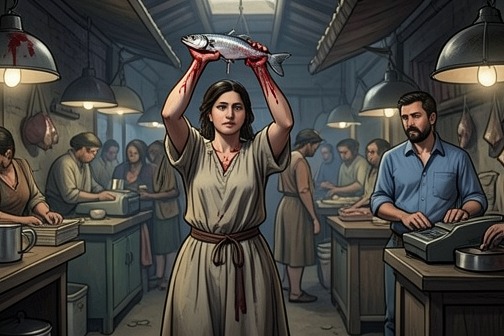
[Sofia steals a fish and confronts Pablo](entity:event-recall-event-sofia-pablo-51d9b969e640) in an episode where a proposed exercise in courage becomes a material, risky act. After taking a dorado from a crowded village market, she carries it home, prepares it with blood still on her hands, and runs to demand that [Pablo](entity:character-recall-character-pablo-ae43f39c6dd1) untie his dog. The sequence joins theft, bodily transformation, and confrontation: Sofia discovers a new sense of purpose, but the scene does not present that purpose as uncomplicated triumph.
## Causes and Setting
The episode begins with [Dr Gómez](entity:character-recall-character-dr-g-mez-9725c8236a4f)’s suggestion that Sofia steal a fish to develop courage and purpose. She approaches the task as an anthropological experiment, while recognizing that the idea borders on magic or magical thinking. The local market, hidden near a Romanian pizzeria in the basement of an apartment block and little known to tourists, is already busy with village women buying the day’s catch. Theft here means taking something from an ordinary local economy, not from an anonymous display.
Sofia first considers a monkfish, whose gaping mouth and two rows of teeth draw her attention. When she pokes at it, the cashier sharply tells her not to touch. Sofia realizes she has made herself conspicuous, the opposite of the thief’s aim of going unseen. A basket with leather straps chafes the raised welts from her jellyfish stings, making her body’s discomfort part of the practical challenge. She considers taking soft, shapeless octopus, but its changeable skin and strange eyes make her uneasy. Then she sees a plump dorado, which she imagines as furious and destined for her.
The market scene also distinguishes boldness from mere audacity. A woman’s loudness commands attention and fear, but Sofia questions whether this makes her bold, or whether it is the kind of boldness she wants. The cashier’s watchfulness and the other woman’s attention-grabbing presence give Sofia the conditions for her experiment: she must act under scrutiny without confusing spectacle with courage.
## The Theft and Its Immediate Effects
To take the dorado, Sofia tries to master her fear of exposure and shame. She relaxes her muscles and holds herself still, comparing herself to a tea leaf, a phrase that evokes cockney rhyming slang for thief. She distracts the cashier with her left hand, touching the price tag on the langoustines, while her right hand slides the fish into her basket. Someone bangs her near the stings, but she ignores it and walks straight out.
The escape gives her a new sense of purpose and intention. It is forceful enough, she reflects, to close off her senses and make her single-minded; that gain has a cost, because she is unsure whether such purpose is worth what it shuts out. The episode’s argument about action is therefore ambivalent. Sofia has completed the task and crossed a boundary, but the intensity that enables her to act also narrows her attention.
At the beach apartment, she holds the fish by its tail and studies its unchanged, furious expression. She takes off her shoes and spreads her toes on the floor before scaling and gutting it with a blunt knife. The diving-school dog howls without pause; Pablo’s dog barks incessantly. As Sofia cuts into the dorado, its blood covers her hands, giving the abstract risk of being caught a vivid physical form. She thinks of her Greek family from Thessaloniki, who would not need Google to explain how to gut a fish, and of the [Yorkshire](entity:location-recall-location-aec346f1fc36) relatives who bought fish from dockside trawlermen. The work brings two sides of her family history into the kitchen, even as the stolen fish makes her literally red-handed.
## Confronting Pablo
The dog’s howling becomes intolerable to Sofia. She throws down the knife and runs barefoot across the sand to the entrance of the diving school, pushing the door open with her blistered shoulder. There she finds Pablo bent over his computer with a glass of vermouth. His sleepy appearance gives way to a flinch when he looks up. Sofia tells him to untie the dog.
A mirror behind Pablo reflects Sofia with fish blood streaking her cheeks and entrails caught in her tangled hair. She sees herself as a sea monster rising among the shells and starfish decorating its frame, and recognizes that her appearance frightens both her and Pablo. The stolen fish has not simply supplied a meal: its preparation has made Sofia look like the frightening figure she fears becoming. Pablo threatens to call the police and claims that officers in nearby villages are his brother, cousin, and best friend. While he reaches beneath the desk, Sofia grabs his hand, presses her forehead to his, then steps back to let him pass. She steadies herself against a newly painted white wall, leaving three bloody handprints on it.
Pablo curses her in Spanish and climbs toward the roof terrace holding a yellow, stinking bone—the object he had been reaching for beneath the desk. Upstairs, he kicks a chair and makes clicking sounds that seem to calm the dog. The confrontation offers no clean victory: Sofia has challenged Pablo directly, but his threat of police protection and his control of the dog remain tangible. The blood on the wall preserves the encounter as a mark left in public space, rather than an inwardly completed exercise.
## Consequences and Significance
The narrative later makes clear that Sofia has freed Pablo’s dog: she invites [Ingrid Bauer](entity:character-recall-character-ingrid-bauer-49d5c41bbd7c) to share the dorado and celebrate freeing it. This consequence connects the theft to a second act of intervention. The fish that Sofia took for an experiment in courage becomes food for a shared evening, while the confrontation has changed the dog’s situation.
The aftermath complicates that apparent success. Sofia and Ingrid know Pablo has been seen walking the dog in the village. The dog has tried to bite the hand of a Belgian woman waiting for change at a bar, and it has had to be muzzled. Pablo, meanwhile, shouts and kicks whatever is in his way, while remaining protected by his network of police relatives and friends. Freeing the dog has not dissolved the danger around it or the unequal power that shields Pablo.
The episode also belongs to a broader pattern in which water is experienced as both material and risk. Before the market episode, Sofia is preoccupied with finding water that is more right than wrong for her mother; at a beach café, a waiter warns her away from the sea after several people are badly stung by jellyfish. Later, Ingrid recounts that sea police found a gasoline spill and ordered swimmers out, despite the diving-school owner’s insistence that the water was clean. These surrounding details do not explain the theft, but they sharpen its setting: fish, bodies, and the sea are all subject to danger that is felt through direct contact, while official or local assurances prove uncertain.
Sofia’s experiment thus moves through several kinds of exposure: the risk of being seen stealing, the blood on her hands, her monstrous reflection, and the danger of challenging a man who claims police protection. The change is not simply from timidity to boldness. She acts with new intention, and that intention helps her intervene for the dog; at the same time, she notices how purpose can blind her to everything beyond its immediate aim. The event’s force lies in holding both outcomes together.
Event 5
Sofia is stung by jellyfish again and becomes intimate with Juan

[Sofia Papastergiadis](entity:character-recall-character-sofia-papastergiadi-45252dcd4f4e)’s second Medusa-sting episode turns a dangerous swim into an unexpected encounter with [Juan](entity:character-recall-character-juan-08eb0a988bb3), the attendant at the beach injury hut. The episode links risk, care, and desire without making them interchangeable: Sofia knowingly swims beyond the warning, returns needing help, and then chooses to pursue a connection with the person who treated her. Its movement from medical attention to supper and intimacy also gives concrete form to her growing boldness, even as her longing for [Ingrid Bauer](entity:character-recall-character-ingrid-bauer-49d5c41bbd7c) remains unresolved.
## Setting and Recurrence
The episode begins on an empty beach in late afternoon. The absence of the inflatables and plastic boats that usually crowd the water makes Sofia’s swim seem, to her, like a chance to go farther than ordinary beachgoing allows. She tells herself she is heading toward North Africa, visible only as a vague outline, and treats the impossible destination as a way of sustaining a long swim. The journey is less a practical attempt to reach another country than an effort to keep moving beyond the familiar shore.
That choice repeats the book’s recurring intersection of swimming, bodily risk, and uncertain judgment about water. Earlier, at a beach opposite a cement factory, a waiter had warned Sofia not to swim after several people were badly stung by [Medusas](entity:creature-recall-creature-779a4b5b331e). The injury hut also belongs to her existing experience of beach danger: she had previously wondered whether its small refrigerator held still or sparkling water, thinking of ways to make water more suitable for her mother. In the later episode, water is no longer only a problem of care and choice. It becomes the setting of Sofia’s deliberate risk and the route back to a person who can help her.
## The Swim and the Return for Care
After about thirty minutes, Sofia turns onto her back and floats. When she turns again, she sees the Medusas in the water and feels the consequences of swimming farther out. She heads back to shore, where the stings make movement difficult. The attendant is waiting at the injury hut with ointment, having seen her swim out and called to her. His warning that she should have noticed the flag establishes that this was not an unforeseeable accident: Sofia had gone into the water despite a visible signal and a shouted attempt to stop her.
Juan’s recognition of her matters within the scene. He remembers her name, Sofia Papastergiadis, and checks whether she is breathing. His concern is practical and immediate; he tells her she was reckless to swim so far while the flag was raised. He then helps her onto a low table, finds a cushion, and applies ointment while seated beside her. The sequence gives care a specific form—recognition, assistance, and attention—rather than presenting it as an abstract sentiment. Sofia’s response, however, does not remain within the terms of treatment.
## From Treatment to Invitation
Sofia experiences the attendant’s shouting as something that could belong to a brother or a lover, and she is unsettled by the strength of her attraction. The episode describes this shift as desire arriving through the sting: pain and the attendant’s careful touch become entangled in her perception. This is not a considered declaration of love, nor does the scene suggest that Juan’s professional care itself constitutes a romantic promise. Rather, the physical intensity of the moment alters how Sofia reads their closeness, while her awareness that she is becoming someone she does not recognize adds unease to the attraction.
When Juan gives her a form asking for personal details, Sofia leaves most of it blank and writes Monster under occupation. The choice connects the encounter to her existing sense of herself as monstrous in Ingrid Bauer’s eyes and to her feeling that she is Ingrid’s creature. Juan responds by calling her a beautiful woman. The exchange does not resolve Sofia’s troubled self-image; it places a different judgment beside it. He sees and addresses her as a woman at the very moment she has labeled herself a monster, and that contrast helps explain why the encounter becomes charged for her.
Later, Sofia walks back across the beach to the injury hut and asks Juan to join her for supper. The invitation is a distinct action, not simply an extension of his treatment: she initiates a meeting outside the hut and asks to know his name. He tells her that it is Juan. Sofia answers by asking for the kinds of identifying details that had appeared on the form—his birth date, country of origin, and occupation. Her questions echo the earlier medical encounter, but she now directs them toward someone she wants to know. The repeated form-like exchange turns a routine request for information into a tentative courtship, while her decision to invite him demonstrates the boldness she has begun to recognize in herself.
## Supper, Rejection, and Intimacy
The supper takes place after Sofia has stolen a gilt-head bream and prepared it at her beach apartment. The fish is not an incidental dish: its theft has required her to overcome fear of being discovered, and preparing it brings her Greek and [Yorkshire](entity:location-recall-location-aec346f1fc36) family histories into her thoughts. Once the meal is ready, she leaves the kitchen and crosses the beach to invite Juan. The movement links her newly claimed purpose to a concrete act of hospitality, though the supper is made from stolen food and follows an evening of danger rather than a settled domestic routine.
When Juan arrives, he brings four bottles of beer that he says he kept in the injury hut. He asks after Sofia’s mother, who is asleep. They eat the bream at a table set for two on the terrace; Juan comments on the fish’s layer of fat, and Sofia notices the tenderness of its flesh. Their conversation and meal are followed by a swim together at night and a gradual movement into intimacy. The account establishes that Juan becomes her lover without making the encounter a durable commitment or claiming more about their future than the episode supplies.
The evening also takes place under the pressure of Sofia’s rejection by Ingrid. Sofia meets Juan’s eyes with the confidence of someone who feels beloved, while withholding from that display the fact that Ingrid has rejected her. The contrast is central: the episode does not show Sofia simply replacing one attachment with another. Instead, Juan’s attention offers a different experience of being desired and welcomed, while Ingrid remains the absent person whose rejection shapes Sofia’s performance of confidence. Sofia calls herself Juan’s conqueror, a reversal that frames the encounter as an assertion of agency after the vulnerability of the beach treatment.
## Consequences and Significance
The episode’s value shift runs from Sofia’s self-directed risk, through dependence on Juan’s help, to her initiative in inviting him home. The sequence does not erase the danger of her decision: Juan had seen the warning flag and tried to call her back, and she still returned from the swim needing treatment. What changes is her position within the encounter. At first she is the person being watched over; afterward she makes the invitation, sets the supper, and chooses how to approach intimacy.
Water remains an unreliable medium rather than a simple emblem of freedom. Sofia imagines the distant coast as a destination beyond her present life, but the sea also contains the Medusas that force her back to shore. This double function is consistent with the novel’s recurring concern with the right and wrong uses of water, including Sofia’s earlier attention to what her mother might drink and later reports of other threats to local bathing water. Here, the immediate consequence is personal: the swim brings Sofia into Juan’s care, and the care becomes the beginning of a brief romance. The episode’s ending leaves that connection real but limited, while showing Sofia acting with a boldness that her earlier uncertainty had made difficult.
Event 6
Rose lets Sofia drive for the first time
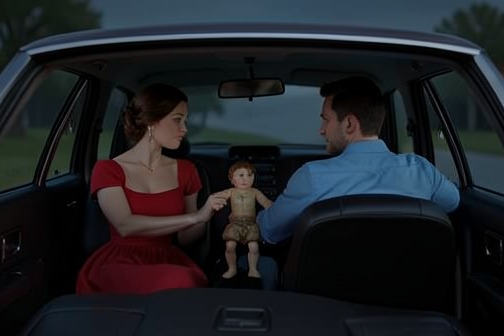
[Rose lets Sofia drive for the first time](entity:event-recall-event-rose-sofia-897a0ecebce6) when she throws the keys into Sofia’s lap and tells her to take them home. The drive is hesitant and imperfect: Sofia reverses over a child’s doll, struggles with the gears, and needs Rose’s instructions. Yet the scene turns a practical handover into a revealing exchange of care. Rose gives Sofia the chance to act, then coaches her through the journey; together they arrive at a phrase for their interdependence, with Rose as Sofia’s eyes and Sofia as Rose’s legs.
## Background and stakes
The drive belongs to a relationship already organized around Rose’s uncertain mobility and Sofia’s practical responsibility. While being observed at a first-aid hut after a sting, Sofia describes her mother as her preoccupation and explains that they are in [Spain](entity:location-recall-location-0fe76f866976) to visit the [Gómez Clinic](entity:organization-recall-organization-g-mez-clinic-c9e2f9a39d29) to learn what is wrong with Rose’s legs. Their first appointment is still three days away. The clinic visit gives the journey a wider setting of care and uncertainty, but the driving scene itself is not a medical breakthrough: it shows how the two manage ordinary movement while the cause of Rose’s difficulty remains unresolved.
Sofia’s caregiving role also carries financial weight. Elsewhere, she connects the family’s limited resources to her estranged father, who inherited a fortune from his grandfather’s shipping business in [Athens](entity:location-recall-location-90681f7b48c3) but, as Sofia describes it, has not shared any of it with her and Rose. She casts Rose as her creditor and her own legs as the means of repayment, because they are continually running around for her mother. That image gives the first drive a pointed reversal. Sofia’s legs, usually enlisted in Rose’s service, are now being tested at the pedals; Rose, whose legs are the source of concern, contributes by watching, advising, and helping Sofia manage the car.
## The handover of the keys
Rose’s instruction leaves little room for Sofia’s hesitation. Sofia says she cannot drive, but Rose answers that the anise liqueur was too strong and that she cannot drive either. Rose starts to edge herself into the passenger seat, forcing Sofia to get out, walk around, and take the driver’s place. The transfer is both literal and relational: Rose does not merely ask Sofia to help with a task but makes a place for her at the controls.
Sofia inserts the key, starts the engine, works the handbrake, and begins to reverse. Rose praises the manoeuvre as perfect, but the next sound is a crunch beneath the wheels. Rose identifies the object as a child’s doll and immediately directs Sofia to change gear, signal, and put on her seat belt. The mishap is not allowed to end the attempt. Rose folds correction into encouragement and keeps the journey moving, treating a mistake as something to respond to rather than a reason to take the keys back.
## Learning the road together
The first stretch is slow: Sofia drives at ten miles an hour while Rose leans forward to adjust the mirror and tells her to go faster. Sofia initially has the wrong gear, then corrects it and dares to increase her speed on the new, empty motorway. Rose tells her she feels safe in Sofia’s hands, then points out that traffic in Spain keeps to the right. Sofia laughs. The exchange makes the lesson intimate without making it effortless: reassurance and instruction arrive together, and Rose’s confidence does not prevent her from correcting Sofia.
The car continues to demand attention. An unidentified object rattles around in the boot as Sofia turns; she slows, the vehicle jerks to a stop, and Rose tells her to balance the brake and accelerator, select neutral, and start again. When the car moves, Rose corrects the gear position herself. Her sharper concern is not Sofia’s lack of a licence but her lack of spectacles: Rose says she will have to be Sofia’s eyes. The detail makes their dependence concrete. Sofia can operate the pedals and steer, but Rose supplies the visual guidance that Sofia lacks; Rose’s instructions, meanwhile, depend on Sofia being the one who can drive them onward.
## Reciprocity and significance
After they reach the car park at the end of the village, Sofia pulls up the handbrake and Rose announces that she has a new chauffeur. It is a small declaration of changed capability, not evidence that Sofia has become an experienced driver: the scene has shown a stalled car, misjudged gears, a crushed doll, and close coaching. Its significance lies instead in the pair’s ability to turn a first attempt into a usable arrangement. Rose can entrust Sofia with the driving, and Sofia can accept guidance without the scene presenting her only as a passenger in her mother’s life.
Sofia’s formulation that Rose is her eyes and she is Rose’s legs gathers the episode’s practical details into a compact account of mutual reliance. The wording also complicates the earlier image of repayment. Sofia has described her legs as what she pays her mother with; here, the roles are reciprocal rather than simply creditor and debtor. The drive does not remove the burden of care or settle what is wrong with Rose. It gives their dependence a visible, shared form: one guides while the other moves the car, and both are needed for the journey home.
Event 7
Rose agrees to stop all medication
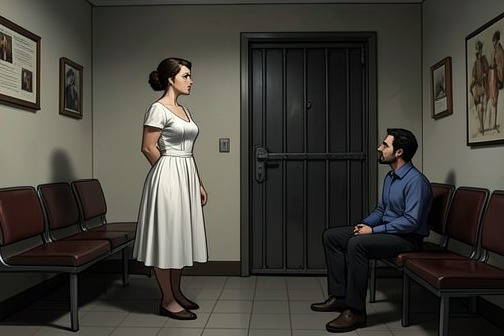
[Rose Papastergiadis](entity:character-recall-character-rose-papastergiadis-318ee23605d9) agrees to stop all her medication when [Dr Gómez](entity:character-recall-character-dr-g-mez-9725c8236a4f) makes complete withdrawal a condition of continuing treatment. The decision follows an examination that finds age-related changes in her bones but no significant loss of bone material. It is therefore not presented as a response to a clear skeletal diagnosis; instead, the scene shifts attention from what the X-ray can explain to the many medicines Rose takes and the caregiving routine built around them. Her assent briefly makes treatment possible on Dr Gómez’s terms, while leaving the medical and practical consequences unresolved.
## Background to the Decision
At Rose’s first consultation, Dr Gómez identifies two ulcers on the sole of her right foot. The affected area is small but slightly infected, and he asks whether she has been tested for diabetes. The finding establishes a concrete health concern, but it does not, in the evidence here, explain her wider mobility problems or the full range of her symptoms. The later discussion of medication unfolds against that uncertainty rather than as the conclusion of a single, settled diagnosis.
Dr Gómez had already proposed reviewing Rose’s prescriptions with her. He wanted her to say which medicines she felt most attached to and which she could relinquish, framing the review as a conversation about her experience as well as a clinical inventory. By the time of the later consultation, however, the proposal has become categorical: continued treatment depends on giving up every pill. The change in wording marks a shift from asking Rose to consider individual medicines to demanding a complete break with the regimen.
## The Consultation and Rose’s Agreement
The atmosphere in the consulting room is tense. Dr Gómez appears irritated, with his sleeves rolled up and his hair damp with sweat. He examines Rose’s latest X-ray and says that she is losing bone density, but characterizes this as normal for women aged fifty and older. He explains that bones become less dense and strong after forty-five, while adding that Rose has not suffered a significant loss of bone material. His practical recommendation is that she walk home.
He then makes the treatment condition explicit: Rose must stop every medication, including prescriptions for cholesterol, sleep, heart palpitations, indigestion, migraines, back pain, blood pressure, and pain relief. The breadth of the list matters. It presents her treatment not as one drug under review but as a network of medicines addressing different complaints and routines. Rose looks directly at him and agrees to begin working with him. Her response accepts his proposed terms; it does not, by itself, establish that the cause of her symptoms has been found or that stopping the drugs will resolve them.
## Sofia’s Place in the Medication Routine
The decision also implicates [Sofia Papastergiadis](entity:character-recall-character-sofia-papastergiadi-45252dcd4f4e), who has become used to administering her mother’s medication. Dr Gómez interprets that habit as more than practical care: he tells Sofia that she is using her mother as a shield against making a life of her own, and describes medication as a ritual he has erased from both their lives. His interpretation places the mother-daughter relationship inside the treatment encounter, making the proposed change apply psychologically to Sofia as well as medically to Rose.
That reading resonates with the pair’s daily dependence, but the narrative also gives the routine a bodily and ordinary dimension. Sofia fetches water when Rose asks, although she cannot always tell what kind of water her mother wants. At the clinic, the two have limped together, Sofia adjusting her pace to Rose’s. Sofia sometimes catches herself limping even when alone, as if her body remembers walking beside her mother. These details complicate Dr Gómez’s account: caregiving is a pattern that shapes Sofia’s movements and attention, not merely an obstacle he can remove by ending a medication ritual.
## Later Consequences and Uncertainty
The later review of the clinic’s care makes the consequences less straightforward than the promise of a clean break. Dr Gómez explains that Rose was admitted to hospital for two nights because she was dehydrated and received intravenous saline. He says she cannot easily swallow water and therefore cannot easily swallow medication. When asked whether she has been taken off all medication, Rose says she is back on track and notes that the doctor at the hospital in [Almería](entity:location-recall-location-almer-a-aa06e71aa938) was concerned too. The account confirms that stopping medication became part of the treatment history, but also shows that hydration, swallowing, and the ability to take medicines were inseparable practical issues.
The episode thus leaves the agreement suspended between clinical authority and lived difficulty. Rose assents after hearing that her bone loss is not significant, while the subsequent hospital account introduces dehydration and difficulty swallowing as immediate concerns. Sofia, meanwhile, is asked to imagine a life without the caregiving ritual that has organized her own daily actions. The promise of treatment through withdrawal does not settle the question of what Rose’s body needs; instead, the later return to medication and the hospital’s concern reveal how provisional the agreement was.
Event 8
The snake encounter at Ingrid’s cortijo

The snake encounter at [Ingrid Bauer](entity:character-recall-character-ingrid-bauer-49d5c41bbd7c)’s cortijo interrupts an intimate encounter with sudden physical danger: after Ingrid Bauer kills a snake with an axe, the narrator’s fear gives way to a kiss, while a later meeting with [Leonardo](entity:character-recall-character-leonardo-0508ae1f1ab4) makes the incident resonate as a contest of threat and power.
## The snake in the shower room
The danger arrives just after the two women leave the shower. The room is tiled from wall to ceiling in flint-coloured stone, and icy water has left them shuddering. Before either sees the snake, they sense that something is wrong: the feeling is invisible and noiseless, yet raises the hairs on their arms. The threat then becomes visible as a blue snake slithers from a basket of kindling, crossing the stone floor towards the window. Ingrid Bauer, wrapped in a white towel with wet hair, identifies it first in Spanish and then again in German; her voice remains calm, though slightly higher than usual.
Ingrid Bauer approaches the snake where it lies by the wall and takes a small axe from the top of a log. Holding it like a golf club, she advances slowly, leaving wet footprints across the floor. She lifts the axe only a few inches before striking the snake on the head. Its body is severed, curls up, and continues to writhe in two parts. The swift, deliberate blow changes the scene from unspoken apprehension to visible violence, while the snake’s continuing movement leaves the danger not entirely settled.
## Fear, intimacy, and the scene’s aftermath
[Sofia Papastergiadis](entity:character-recall-character-sofia-papastergiadi-45252dcd4f4e) tells Ingrid Bauer to move away from the snake, but Ingrid wants her to come closer. The severed body still loops on the floor, and Sofia is not convinced it is dead. Instead of approaching empty-handed, she takes [Matthew](entity:character-recall-character-matthew-a5deff0a1193)’s bottle of wine and drinks from it; its taste of crushed plums and bay leaves accompanies her walk back to Ingrid. She kisses her, circles her waist with one arm, and uses the other to remove the axe from Ingrid’s fingers. Fear has not simply disappeared: the kiss takes place while the weapon is still in Ingrid’s grasp, and Sofia’s gesture both accepts closeness and disarms her.
The women then dress as if the dead snake were not there. Their routine adjustments—putting on dresses and rings, fixing earrings, brushing their hair—sit beside the room’s undisturbed details: the soft sheets, sewing machines, fabrics, fig bread, and aromatic wine. The shower continues to drip; the snake remains in two pieces on the stone floor. This composure does not resolve the shock so much as place it inside an ordinary sequence of getting ready and leaving.
At the car, Leonardo, Ingrid’s riding teacher, is leaning against the door. Sofia reads his look as a threat and imagines him trying to diminish her, but she meets his gaze until he freezes with his cigarette held between his fingers. The staring contest echoes Ingrid’s earlier blow against the snake: Sofia understands the look as something to be struck down, though now the weapon is her own returned gaze.
Ingrid abruptly runs to Leonardo and kisses him on the lips. The kiss seems to rouse him; they high-five, their hands remaining joined as Ingrid leans toward him. Their easy physical familiarity unsettles Sofia, who reads the exchange as Ingrid presenting herself as aligned with Leonardo despite having been with her. The episode therefore closes not with the snake’s death alone, but with a new uncertainty about intimacy: after sharing a room, a kiss, and danger, Sofia encounters Ingrid’s closeness with another person as a possible betrayal.
## Sexuality as embodied knowledge
Before the snake appears, Sofia Papastergiadis casts her encounter with Ingrid Bauer as a form of self-study. Margaret Mead’s research journeys to Samoa and Tahiti offer a contrast: Sofia does not need to travel elsewhere to investigate human sexuality, because the subject she cannot understand is herself. Ingrid’s body becomes an image through which that uncertainty is felt, while Sofia describes their meeting as if it had been scheduled without either woman arranging it. The language of assignment and foreknowledge lends their intimacy a sense of inevitability, but the snake interrupts that imagined script with a danger neither can master by interpretation alone. Fear moves from an abstract uncertainty about desire into the body: the women shudder in the icy shower, register danger before they can see its cause, and must respond to a creature crossing the floor. The encounter therefore binds sexual self-knowledge to vulnerability rather than resolving it; intimacy becomes legible through sensation, alarm, and action, while the meaning of the relationship remains unsettled.
## Violence, naming, and the limits of control
The scene makes danger legible through acts of naming and looking, but neither act fully contains it. Ingrid Bauer identifies the snake across languages, while Sofia Papastergiadis interprets Leonardo’s gaze as an attempt to diminish her and answers by holding his eyes until he freezes. The parallel is deliberately uneven: Ingrid’s axe physically severs the snake’s head, whereas Sofia’s imagined counterstrike can only unsettle Leonardo for a moment. The snake’s body continues to writhe after the blow, and Ingrid’s subsequent kiss with Leonardo leaves Sofia unsure where their intimacy stands. Naming, violence, and eye contact offer ways to confront threat, not guarantees of mastery; the encounter’s apparent victory over the animal gives way to a human exchange whose meaning remains unresolved.
Event 9
Sofia’s reunion with her father in Athens

[Sofia’s reunion with her father in Athens](entity:event-recall-event-sofia-89c5a5b50bef) turns a long-anticipated meeting into a test of what family can offer after absence. At [Athens International Airport](entity:location-recall-location-b968bd63cc39), [Christos Papastergiadis](entity:character-recall-character-christos-papastergi-b4d3559928f2) welcomes Sofia after eleven years without seeing her, but she arrives alone while he stands with his new wife, [Alexandra](entity:character-recall-character-alexandra-d152cf4180a2), and their infant daughter, Evangeline. The visit offers recognition and tentative intimacy, yet it also exposes the limits of reconciliation: [Christos](entity:character-recall-character-christos-a3e566aa7b90)’s new household belongs to the life he made after leaving Sofia and Rose, while Sofia must decide what, if anything, she can still ask of him.
## Arrival and the New Family
The reunion begins amid the ordinary sounds of the airport rather than a prepared declaration. Christos takes Sofia’s suitcase, kisses her cheek, and asks about her flight. His carefully ironed blue shirt and relaxed, tanned appearance contrast with her memory of his hair as silver; it now seems blacker. The years apart have altered him, but recognition between them is immediate. He welcomes her and asks her to call him Papa, an invitation to kinship that arrives before they have addressed the history separating them.
He then introduces Alexandra and Evangeline. Alexandra, tired and damp with milk on her denim shirt, looks wary but welcoming; the baby’s brown eyes catch Sofia’s attention. Watching the couple look down at their daughter, Sofia sees an open, unashamed love between them. The sight makes the family’s arrangement difficult to place: Christos is sixty-nine and Alexandra twenty-nine, and they can appear like a father, daughter, and grandchild. Yet Sofia distinguishes the apparent strangeness of the age difference from the affection she observes. Christos is caring for two new women, while Sofia understands herself as belonging to the earlier life that had made him unhappy. She has pinned up her hair with three scarlet flamenco flower clips bought in [Spain](entity:location-recall-location-0fe76f866976), a small act of preparation as she approaches this unfamiliar family.
## A Walk Framed by Debt
On her second day in [Athens](entity:location-recall-location-90681f7b48c3), Sofia offers to walk through the park with Christos along his route to work. It is their first time alone together without Alexandra and Evangeline, whom Sofia figures as human shields between Christos and the creditor he left behind. The image turns their estrangement into an account that cannot simply be settled: Sofia knows his absence from her life is not a debt he can repay, although pretending to negotiate still feels exciting.
The walk offers no easy release into conversation. Sofia moves unsteadily in black suede platform sandals, Christos carries the small portion of guilt that, in her description, his god has not entirely absolved, and they stagger through the park in silence. Graffiti near the metro asks, “WHAT NEXT?” The words fit the uncertainty of the meeting: the two are together again, but neither the route he takes to work nor the fact of their shared history supplies an answer about what their relationship should become.
## The Request and Its Refusal
When Sofia tries to speak plainly, she considers what she might ask for: financial help, or time in which to explain where her life stands. She is also unsure whether listening would be to Christos’s advantage. At last she tells him she is thinking of finishing her doctorate in America. The possibility is entangled with care: she would need funding and would have to leave Rose alone in Britain, and she does not know what to do.
Christos tightens his face and withdraws behind a practical-sounding answer. He tells Sofia to do as she pleases, mentions grants for overseas study, and says Rose has chosen to live as she does and is not his concern. Sofia asks for advice, not merely information about grants, but Christos steps backwards toward a closed door. The exchange makes the boundary of the reunion concrete. Sofia has approached him as a father whose counsel might help her weigh work, money, and responsibility for her mother; he declines the responsibility she is asking him to share. His response does not erase the possibility of contact, but it leaves her facing the decision without the guidance she sought.
## Ten Euros and a Paper Flower
The night before Sofia leaves, Christos announces that he wants to give her spending money. The offer moves her because he has not given her money in that way since she was fourteen. He searches his worn leather wallet, then realizes he has forgotten to go to the bank. After rummaging, he produces a single ten-euro note, smooths it on the table, and hands it to her with a flourish. The smallness of the sum and the effort of the presentation sit together: this is an awkward, limited offering, but it is also an attempt to give.
When a woman begging approaches Sofia’s table, Sofia puts the note into the woman’s plastic cup. The woman speaks Greek, limps nearer, and kisses Sofia’s hand—the first affection anyone has shown her in Athens. Sofia recognizes how hard it is to accept that the first man in her life might do things to her disadvantage when they serve his own advantage. That recognition, painful as it is, also becomes a revelation that sets her free. The money has passed through her hands without repairing the father-daughter relationship; its meaning lies instead in what Sofia can see and choose after receiving it.
Christos then folds a paper napkin into a flower with three dense layers of petals. At first he seems not to recognize what he has made. Sofia becomes bolder and tells him she thinks the flower is for her. He confirms that it is, remembering that she likes wearing flowers in her hair, and gives it to her. His happiness that she keeps it, and the reluctance with which he had claimed the gift, make the gesture tender but tentative. Unlike the money, the flower is made by hand for Sofia; unlike an apology, it does not explain or undo the years of absence. It gives their parting a small object of attention without pretending to settle the larger account.
## Departure and What Remains
As Sofia wheels her suitcase toward the bus station to catch the X95 to the airport, she feels more like herself—and alone. Her suitcase holds the paper flower, made from the same kind of paper as the books her librarian mother spent her life indexing. The image connects Christos’s fragile gift to Rose’s labor with words, while Sofia recognizes that neither her mother’s cataloguing nor her father’s gesture can restore wishes dispersed by a world not arranged to their advantage.
The reunion therefore ends in partial, not complete, rapprochement. Sofia leaves with no assurance that Christos will fund her doctorate or help care for Rose, and the family he has formed remains distinct from the history she shares with him. But she has met Alexandra and kissed Evangeline’s feet and hands, accepted that a gesture from her father can matter without cancelling his failures, and retained the flower. Her departure does not turn solitude into abandonment: she feels more like herself as she goes, carrying an imperfect gift and a clearer sense of what the reunion has—and has not—changed.
Event 10
Discovery of the embroidered word “Beheaded”

The discovery of the embroidered word becomes a sharp reversal in [Sofia Papastergiadis](entity:character-recall-character-sofia-papastergiadi-45252dcd4f4e)’s understanding of her attachment to [Ingrid Bauer](entity:character-recall-character-ingrid-bauer-49d5c41bbd7c): a yellow silk top she has worn almost every day no longer seems to bear the reassurance she longs for, but a word she reads as exposing an unwelcome thought. The scene turns on the distance between seeing and wanting to see, and on how quickly an intimate object can become a surface for fear.
## The garment and the moment of recognition
The discovery follows a sequence of images Sofia associates with Ingrid’s embroidery: a snake, a star, and a cigar. Returning to her bedroom, Sofia finds the silk sun-top on her camp bed. Its smell gathers coconut ice cream, sweat, and the [Mediterranean Sea](entity:location-recall-location-faab9330cc7a) into a single, close sensory impression. In the next room, Evangeline murmurs with the window open, the breeze making her soft black hair tremble. These ordinary details surround the moment without explaining it away: Sofia takes the top to wash it in a bath full of soapy water, then brings the wet silk closer to her eyes, and closer still.
The recognition arrives as a correction. The blue embroidery is not the word Sofia had taken it to be. She acknowledges that she misread it and had invented a word that was not there; the actual word is *Beheaded*. The short, stark correction makes the discovery feel less like a gradual interpretation than the sudden collapse of one. A piece of clothing worn repeatedly has carried a meaning Sofia supplied, and the act of washing it brings the inscription into a focus she can no longer evade.
## [Beloved](entity:expression-recall-expression-beloved-ea5530942620) and the meaning Sofia gives the word
The reversal is emotionally decisive because *Beloved* names what Sofia wishes were true. She recognizes that this reading was a hallucination: the desired word had not been embroidered on the silk. The scene does not establish Ingrid’s intention through an explanation from Ingrid. Instead, Sofia interprets the inscription through what she understands about Ingrid’s private, creative life. Ingrid is a seamstress; Sofia figures the needle as Ingrid’s mind and the word as a thought left uncensored in thread.
That interpretation gives the garment an almost unbearable intimacy. Embroidery is both material work and a record of thought, but the thought Sofia attributes to Ingrid remains her own inference, not a confirmed confession. The distinction matters: the event reveals with certainty that Sofia has misread the inscription, while its account of what Ingrid was thinking belongs to Sofia’s attempt to make sense of it. The gap between those two kinds of knowledge is part of the wound. Sofia’s wish to be loved does not disappear; instead, it is confronted by a word she experiences as its violent opposite.
## Desire, threat, and the aftermath
The discovery follows Sofia’s reflection on wanting to smoke a cigar while having someone else light it for her. She imagines blowing smoke like a volcano or a monster and rejects the role of a girl whose task is to wail at funerals. The sequence links images of force and danger to a desire not to remain passively assigned a feminine role. Against that charged chain of images, *Beheaded* carries an especially threatening force: it is not merely a mistake in reading but the word through which Sofia now understands a feared relation between herself and Ingrid.
After recognizing the embroidery, Sofia lies flat on the cool bathroom tiles. Her eyes remain open as the taps drip through the night. The physical stillness and prolonged wakefulness give the discovery an aftermath rather than resolving it. Anxiety about the snake and [Leonardo](entity:character-recall-character-leonardo-0508ae1f1ab4)’s undermining of her collides with the interpretation of the shirt. The event therefore joins several unsettled fears without proving that they share a single cause. What changes is Sofia’s reading of the garment and, with it, the security she had found in the idea that Ingrid’s work expressed love.
## Sensation and the instability of signs
The episode belongs to a narrative attentive to the way bodily sensation can shape judgment. Elsewhere, Sofia thinks about making water more right for her mother, distinguishing sparkling from still water; at a beach opposite a cement factory, a waiter warns her away from the sea after people are badly stung by medusas. Later, news from the local beach describes a gasoline spill, swimmers ordered out, and Ingmar falling ill after tasting the water. These episodes do not explain the embroidery, but they echo the book’s repeated concern with whether appearances and assurances can be trusted. Water may look clear and still be unsafe; a word may seem to promise affection because Sofia needs it to.
The discovery makes that uncertainty personal and material. The meaning is not hidden in an abstract symbol but stitched in blue thread on a top softened by repeated wear, then brought into view by water and close inspection. The scene’s decisive movement is from *Beloved* to *Beheaded*, from an imagined assurance to a reading Sofia cannot undo. Its ending remains suspended on the bathroom floor, in the drip of the taps and the collision of anxious thoughts, rather than in any confirmed account of Ingrid’s intention.
Event 11
Beach confrontation and phone thrown into the sea

The beach confrontation between [Sofia Papastergiadis](entity:character-recall-character-sofia-papastergiadi-45252dcd4f4e) and [Ingrid Bauer](entity:character-recall-character-ingrid-bauer-49d5c41bbd7c) escalates from an attempt to interrupt a phone call into a struggle in the sea. Its violence is shadowed by Ingrid’s account of injuring her younger sister as a child: when Ingrid later pushes Sofia underwater, the earlier accident returns not as distant history but as a pattern repeated against someone else.
## The Childhood Accident Behind the Confrontation
Ingrid tells Sofia about the accident while they are together on the beach. She speaks beneath her straw hat in a flat, quiet voice, forcing Sofia to lean closer to hear. When Ingrid was five and her sister was three, Ingrid pushed her on a garden swing too hard, unaware of her own strength. Her sister fell, broke an arm, and cracked three ribs. Ingrid remembers that the child had been screaming and wanted to come down, but Ingrid kept pushing her higher.
The first account is not the whole of what happened. Ingrid pauses, then explains that her sister had fallen on her head. An X-ray revealed a cracked skull and brain damage. Sofia responds that Ingrid was only five, but this reassurance does not settle the confession: Ingrid’s own emphasis remains on the force of her pushing and her failure to stop when her sister was frightened. After speaking, Ingrid rises, leaves her hat behind, and walks over the rocks toward a smaller bay, seeking solitude. The disclosure establishes the childhood injury that will give the later beach struggle its particular, unsettling resonance.
## The Phone, the Sea, and Repetition
The confrontation resumes when Ingrid’s mobile rings. Sofia understands the caller to be [Matthew](entity:character-recall-character-matthew-a5deff0a1193), monitoring Ingrid and checking that she is with Sofia. Ingrid answers, “I’m on the beach, Matty. Can you hear the sea?” Sofia reaches over and takes the phone from her hand. Rather than return it, she runs toward the water with it, turning the call—and the control Sofia perceives behind it—into a physical contest.
Ingrid pursues her, first tripping over the laces of her silver sandals, then removing them and throwing them onto the sand. She catches up and tugs at the hem of Sofia’s satin dress; the fabric tears as Sofia throws the phone into the sea. For three seconds it floats among the medusas, which circle it with a calm, pulsing motion, before it sinks. The phone’s disappearance does not end the conflict: Ingrid calls Sofia obsessed with her, while Sofia recognizes her own fixation on Ingrid’s power to unsettle her and on the way men who admire Ingrid’s beauty serve her. Sofia is also drawn to the image of Ingrid repairing rips with a needle, as if tending to herself.
Ingrid wades into the sea, grabs Sofia by the hair, and orders her to retrieve the phone. She pushes Sofia’s head beneath the warm, murky water, then forces her down again with a knee against her shoulder when Sofia struggles. The action echoes Ingrid’s account of the swing: she keeps pushing, and Sofia experiences the assault as the childhood accident being repeated against her. The earlier disclosure therefore becomes more than background to the fight; it gives the underwater struggle a terrible pattern, in which Ingrid’s remembered failure to stop is reenacted on another body.
[Julieta Gómez](entity:character-recall-character-julieta-g-mez-ab6aa4ccf0b4) enters the water and tries to lift Sofia, while Ingrid continues to push her under. A wave knocks Sofia off balance; when she surfaces, Julieta is beside her, treading water and wringing out her long, wet hair. The immediate danger shifts when a woman’s screams come from the small bay. Ingrid has stepped on the medusas she had collected in her net and emptied onto the sand, and now clutches her injured right foot, hopping on the beach. Sofia feels less angry, as though the toxin of her rage has passed into Ingrid’s foot. Julieta tells her, “Your boundaries are made from sand, Sofia.” Sofia acknowledges that she knows, and the scene closes with the two women drifting in the waves as a seagull floats nearby: the phone is lost, the violence has turned back on Ingrid, and Sofia’s fragile sense of separation has been named rather than resolved.
## Boundaries and the Scene’s Reversal
Julieta Gómez’s remark gives the confrontation an afterlife beyond the immediate struggle: Sofia accepts that her boundaries are made from sand, but acceptance is not the same as restoring them. The scene has repeatedly made separation vulnerable to material forces. The hem of Sofia’s dress tears as Ingrid catches it; the phone remains briefly visible among the medusas before sinking; and the sea, which Ingrid invokes during Matthew’s call, becomes the place where Sofia is held under and where Julieta helps bring her back to the surface. These details resist a clean division between control and helplessness. Sofia initiates the physical contest by taking the phone, but Ingrid’s response makes the struggle dangerous, and the interruption comes not from a settled resolution between the two women but from Ingrid’s injury among the medusas. The closing image of Sofia and Julieta drifting together in the waves leaves the conflict suspended: the phone cannot be recovered, the assault has not repaired the relationship, and Sofia’s acknowledgement names a vulnerability without making it disappear.
## Repetition and Responsibility
The parallel between the swing and the sea is powerful precisely because it does not make the two episodes identical. Ingrid describes the childhood injury as happening before she understood her strength; she also remembers that her sister was frightened and wanted the swinging to stop. In the later struggle, however, the force is knowingly applied to Sofia, and Ingrid’s demand that she retrieve the phone accompanies the assault. The repeated motion connects the scenes, but the change in Ingrid’s awareness makes the echo morally disturbing rather than exculpatory.
Sofia’s account of the underwater struggle registers that echo as it happens: the earlier confession becomes a pattern enacted in the present. Yet the scene does not offer a settled explanation of Ingrid through her childhood guilt, or an easy release for Sofia through recognizing the pattern. Its recurrence sharpens the question of responsibility: an old injury can shape how violence is understood without making a later act merely an accident repeated.
Event 12
Sofia submits her application to finish her doctorate in America

Sofia submits her application to finish her doctorate in the [United States](entity:location-recall-location-5d55e9152db1) during a night of acute conflict with Rose. Galvanized by her mother’s wish for an amputation, she stays awake writing and presses Send at sunrise; the act gives her desire for distance a practical form, but the evidence does not establish whether she is accepted or leaves.
## Background: Caregiving and dependence
The application grows out of a relationship organized around care and its repeated failures. Rose calls for water, and Sofia brings it in different forms, trying to understand what her mother wants; even when she boils it without chilling it, it is still wrong. The small task becomes a measure of how little communication remains between them. Sofia no longer speaks to Rose after learning of the amputation wish, which she experiences as the replacement of conversation by a surgeon’s knife.
Their dependence is not simply constant or settled. At one point, Sofia walks with Rose by matching her pace, describing her own legs as her mother’s legs, though Rose had earlier walked alone to a local shop for hairpins. Later, Sofia finds herself limping even when her mother is not with her, as if her body has retained the shared gait. This involuntary echo makes separation difficult to imagine as a clean break: the caregiving rhythm has entered Sofia’s own movement.
## The crisis and the application
Rose’s stated wish to have her limbs amputated shocks Sofia and intensifies an already precarious sense of reality. She feels unable to live with the violence of the intention and describes her own footing as uncertain. Yet the threat also galvanizes her. Rather than resolving the conflict through another conversation, Sofia turns toward a decision she can make alone: she stays awake through the night preparing an application to complete her doctorate in the United States, explicitly wanting to be as far from Rose as possible.
The work unfolds on a shattered digital page beneath the desert stars. Sofia hammers at the keyboard as her sentences take shape, then watches the sun rise. The movement of the Earth around the sun becomes a counterpart to her own sense of spinning, but the passage culminates not in reflection alone: she presses Send. The application is thus both an academic step and an immediate act of separation, made under the pressure of a family crisis rather than in response to any stated deadline.
## Consequences and significance
The decisive consequence established here is that Sofia has submitted the application; acceptance, travel, and the completion of her doctorate remain unresolved. The act changes the direction of her response to Rose’s crisis from sleepless distress to an attempt at departure. It does not erase their bond: the earlier involuntary limp shows how deeply their shared pace has become embodied, even as Sofia seeks distance.
The event also gives the novel’s recurring images of brokenness and movement a concrete turn. The damaged digital page becomes the surface on which Sofia forms a possible future, while the sunrise marks the moment she commits that future to an institution beyond her present life in [Almería](entity:location-recall-location-almer-a-aa06e71aa938). Her choice offers no guarantee of escape, but it converts a wish to be elsewhere into a submitted application.
Event 13
Gómez ends Rose’s treatment
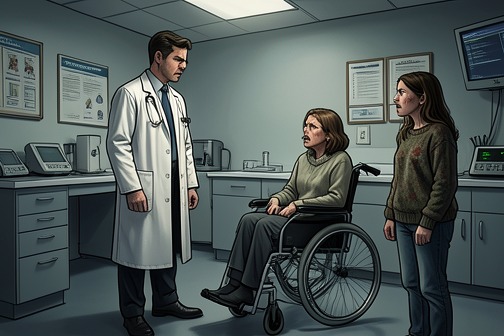
[Dr Gómez](entity:character-recall-character-dr-g-mez-9725c8236a4f)’s decision to end [Rose Papastergiadis](entity:character-recall-character-rose-papastergiadis-318ee23605d9)’s treatment turns an already uncertain course of care into a rupture between clinician, patient, and daughter. He says he cannot treat Rose and doubts she will walk again; [Sofia Papastergiadis](entity:character-recall-character-sofia-papastergiadi-45252dcd4f4e), who has spent years reading her mother’s symptoms and walking in step with her, cannot accept that verdict. The scene’s force lies in the collision of three accounts: Rose’s wish to have her feet removed, Sofia’s insistence that this is dark humour, and Dr Gómez’s decision to take the wish seriously while withdrawing from the case.
## Background: care without a settled explanation
Rose’s treatment at Dr Gómez’s clinic has been a major financial and emotional undertaking. Sofia says the family remortgaged Rose’s house to pay the clinic’s fee of twenty-five thousand euros. The expense weighs especially heavily because Sofia has been trying to make sense of her mother’s symptoms for much of her life. At four, she asked Rose what a headache meant and was told it felt like a door slamming in her head. Since then, Sofia has understood herself as an unwilling investigator, trying to identify causes and patterns as new symptoms and prescriptions arrive. Her own training as an anthropologist gives her a way to examine those accounts, but not a reliable solution: Rose’s complaints move across time, resist a neat chronology, and keep multiplying.
The clinic’s earlier encounters make clear that examination and interpretation have not brought certainty. Dr Gómez finds small ulcers on the sole of Rose’s right foot and asks about diabetes; later he reviews her medication by asking which drugs she is most attached to and which she can let go. He says her pain has not yielded its secrets. Rose describes a chronic degenerative condition, while her feet are numb rather than painful when Sofia asks about them. These details do not settle the cause of her changing mobility. They establish the uncertainty in which the eventual decision is made, rather than proving that one account of Rose’s condition is correct.
## The decision to withdraw
When Dr Gómez gives Sofia the news, she is eating a croissant. He tells her, “I cannot treat your mother. I doubt if she will walk again.” He describes Rose’s symptoms as spectral, coming and going without physiological substance, and explains that she had spoken to him about amputation while Sofia was in [Athens](entity:location-recall-location-90681f7b48c3). Rose wants surgery; according to Dr Gómez, she has asked for it. The report changes the meaning of her repeated remarks about her feet from a familiar figure of speech into a request he believes must be addressed as an intended course of action.
Sofia immediately rejects that interpretation. She laughs and says Rose is joking, invoking her [Yorkshire](entity:location-recall-location-aec346f1fc36) humour and explaining that Rose often says, “Do away with these feet.” To Sofia, the phrase is not a literal request. Dr Gómez allows that it may be a joke, but calls it a threat as well, and says he has already told Rose that he can do nothing for her. He describes her as defeated. Their disagreement is not simply over whether Rose’s words are serious: it concerns who can interpret them, and whether Sofia’s familiarity with her mother clarifies or obscures what Rose wants.
Dr Gómez says it is not within his remit to undo Rose’s words or her wish to sever parts of her body. He will instead reimburse a large portion of his fee, with the money arranged to reach Rose’s bank the following day. Sofia protests that Rose is not speaking literally, but Dr Gómez repeats that there is nothing he can do for her. He also tells Sofia that Rose intends to pursue amputation with a consultant in [London](entity:location-recall-location-1bfd335cdd1b) and has already made an appointment. The possibility is therefore not merely hypothetical within his account: a next consultation is planned, though the evidence does not establish that surgery takes place.
## Sofia’s response and the break in care
Sofia’s response is shaped by the closeness she has described throughout the novel. At the clinic, she and Rose once limped together across the marble floor; Sofia says she walked beside her mother to keep pace, calling her own legs her mother’s legs. She also finds herself limping at other times, as if her body remembers their shared gait. That identification helps explain the shock of hearing that Rose may not walk again, but it also makes separation difficult: Dr Gómez’s directive to distinguish her own movement from her mother’s lands at a moment when Sofia experiences their bodies and pain as closely bound.
She is too shocked to stand and glares at the electrocuted vervet in its glass case in Dr Gómez’s consulting room. He tells her to free herself from the chair and walk to the door, warning her not to borrow Rose’s limp or step into her shoes. The instruction turns the consultation toward Sofia as well as Rose: the caregiver who has been interpreting symptoms and administering medication is told to move independently. Yet the scene offers no instant release from that role. Sofia’s fury and disbelief remain bound to the question of what Rose meant and what will happen to her.
## Aftermath and significance
The end of Dr Gómez’s treatment does not mean Rose receives no further care. At a later review, Dr Gómez says Rose was admitted to hospital in [Almería](entity:location-recall-location-almer-a-aa06e71aa938) for two nights because she was dehydrated and received intravenous saline. He explains that difficulty swallowing water also makes it difficult for her to swallow medication. Rose says she is back on track with medication after a doctor at the hospital expressed concern. The later account complicates any simple reading of the withdrawal as the end of all treatment: the clinical relationship with Dr Gómez has broken down, while Rose’s needs and contact with other medical care continue.
Later, on the shore, Sofia sees Rose walking alone in a sunflower-patterned dress, holding a hat. The sight sharply contrasts with Dr Gómez’s doubt that Rose will walk again and with the amputation request that has divided mother and daughter. Sofia does not run to her; she watches Rose walk along the beach and eventually notices the footprints she has left in the sand. The scene does not resolve the diagnosis or explain the fluctuation in Rose’s mobility. Instead, it makes the limits of prediction visible: a clinical judgment, a family interpretation, and a body’s observed capacity do not settle into one stable account. Dr Gómez’s withdrawal is therefore both a treatment decision and a break in Sofia’s attempt to make her mother’s changing symptoms legible.
Event 14
Review meeting at Gómez’s clinic
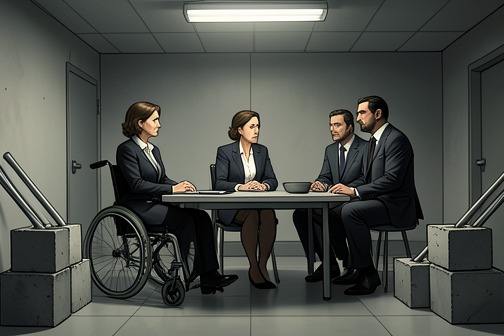
The review meeting at [Dr Gómez](entity:character-recall-character-dr-g-mez-9725c8236a4f)’s clinic turns [Rose Papastergiadis](entity:character-recall-character-rose-papastergiadis-318ee23605d9)’s treatment into a contest over who can define its progress: the patient, the clinicians, her daughter, or the officials recording answers on forms. Convened by a pharmaceutical-company executive and a health official from Barcelona, it brings a long, uncertain history of pain into a room organized around questionnaires, treatment plans, and institutional judgments. Rose’s testimony repeatedly exceeds those categories, while [Sofia Papastergiadis](entity:character-recall-character-sofia-papastergiadi-45252dcd4f4e)’s blunt declaration about her mother’s condition briefly makes the family’s private fear audible in the formal proceedings.
## Background and Stakes
The meeting follows an expensive and still unresolved course of treatment at the [Gómez Clinic near Carboneras](entity:location-recall-location-5d7e13ae886c). Rose and Sofia have remortgaged Rose’s house to pay twenty-five thousand euros for care. For Sofia, investigating her mother’s symptoms has occupied much of her life: she remembers asking what a headache meant when she was four, and has since understood herself as a witness to Rose’s changing pains. Each apparent lead has been followed by another unexplained symptom and another medication, leaving the search for a cause open rather than resolved.
That uncertainty is not abstract in the clinic. During an earlier examination, Dr Gómez found small, slightly infected ulcers on the sole of Rose’s right foot and asked whether she had been tested for diabetes. Rose had also described a sharp tearing pain inside her left elbow after sneezing. Her symptoms arrive in clusters and across time; during one history-taking session, Sofia overhears more than twenty complaints and observes that Rose’s account moves between past, present, and future rather than following a neat chronology. [Julieta Gómez Peña](entity:character-recall-character-julieta-g-mez-pe-a-4b33d0405413) listens without rushing to fill silences, while Rose’s cough seems to precede disclosures she finds awkward or intimate. The later review therefore confronts a history that is extensive, but difficult to reduce to a single complaint or a clean measure of progress.
Medication is part of the conflict as well as its attempted solution. Dr Gómez had asked Rose to identify which medicines she felt attached to and which she could relinquish. He also told Sofia that administering her mother’s medication had become a ritual in both their lives, and suggested that caregiving had protected Sofia from making a life of her own. His intervention frames treatment as something that may shape the caregiver as well as the patient. Yet Rose subsequently tells Sofia that her pain continues to magnify and that her feet are numb, showing how little a change in medication alone settles the question of what is happening to her body.
## The Review in the Consulting Room
The scene, headed Gómez on Trial, is staged beneath the electrocuted vervet specimen and glass case in Dr Gómez’s consulting room. A gaunt pharmaceutical executive, Mr James from Los Angeles, fidgets with a golf ball; his colleague, Señor Covarrubias from Barcelona, sits beside him. Dr Gómez stands before his desk, Julieta Gómez Peña perches on it, and Rose sits regally in her wheelchair, with Sofia beside her. The officials’ clipboards and the golf ball’s repeated movement make the encounter feel at once clinical and evaluative, as if an account of illness is being tested against a prepared instrument.
Mr James begins by asking about Rose’s two-night admission to the clinic. Rose explains that she was dehydrated. Dr Gómez says she received intravenous saline and emphasizes that Rose has difficulty swallowing water, which also makes it difficult for her to swallow medication. Rose adds that she is back on track and that a doctor at the hospital in [Almería](entity:location-recall-location-almer-a-aa06e71aa938) had also been concerned. These details complicate any simple judgment of the clinic: the meeting scrutinizes its care, but the problem under discussion includes a practical barrier to taking the treatment itself.
The officials’ and clinicians’ accounts then part company. Julieta says the treatment is in progress and that the clinic still has work to do, adding that the meeting should conclude so she and Dr Gómez can speak with Rose alone. Rose contradicts her directly: treatment is over, and she has made other medical arrangements for her return to [London](entity:location-recall-location-1bfd335cdd1b). The disagreement is consequential because it concerns not only whether the clinic has succeeded, but who has authority to describe the treatment’s status. Rose is not a passive subject of the review; she corrects its account of her care in front of the people conducting it.
## Progress, Measurement, and Testimony
Señor Covarrubias asks whether Rose has received a progress plan explaining how her treatment is advancing and what it has achieved. Rose says she has seen no such plan. He then asks whether the treatment has helped her become more effective in her life. The question leaves her pale and trembling; she sits silent and gestures toward Sofia, a movement Sofia cannot confidently interpret as a request to leave, a greeting, or a plea for help. Julieta tells Rose she does not have to answer and that the choice is hers.
Rose eventually describes what she can do: she gets up, dresses, and does her hair. She contrasts this daily routine with her childhood, when she ran for miles, jumped hedges and ditches, and made whistles from grass. Her self-description as an old horse is more than a symptom report, but it does not fit easily into the officials’ boxes. They continue ticking their forms as she speaks. Mr James says the meeting was called because the officials are not convinced she is in safe hands. Dr Gómez responds with a list of investigations: tests for stroke, spinal-cord injury, nerve compression and entrapment, multiple sclerosis, muscular dystrophy, motor neurone disease, and spinal arthritis. He also points to a recent endoscopy whose results have not yet been discussed. The exchange sets documented investigation against the absence of a progress plan and the unresolved experience of pain; neither account simply cancels the other.
When Covarrubias invites Sofia to share her concerns, she says she does not know whether her mother is dead or alive. The remark gives stark form to the uncertainty that has accumulated through years of symptom-watching, though Rose is physically present in the room. Julieta looks anguished. Rose thumps the wheelchair and defends her daughter’s first-class degree, then addresses Sofia in Greek, a language Rose taught her from early childhood but which they rarely used at home. Her joke invokes a stereotype about [Yorkshire](entity:location-recall-location-aec346f1fc36) and ends by denying that she owns a whippet. Sofia smiles and Rose laughs. For a moment their complicity interrupts the official story being assembled on the questionnaire: the two appear happier than they are, yet the shared joke is also a real exchange that the forms cannot register.
## Aftermath and Significance
The scene does not produce a settled verdict on Rose’s diagnosis or on the success of the clinic’s treatment. Instead, it exposes competing standards of evidence. The officials seek a progress plan, functional improvement, and answers that can be checked off; Dr Gómez offers a catalogue of serious conditions already investigated; Rose supplies both practical details and an account of lost capacity that resists easy classification. Sofia brings the family’s long history of listening for, interpreting, and anticipating symptoms into the room, but her most forceful statement is also interrupted by Rose’s protective joke.
After the officials leave, Dr Gómez asks Sofia to leave so that he can speak privately with Rose. Before Sofia goes, Rose points out that the glass cage around the stuffed primate had shattered close to her daughter’s head and that Sofia has a small shard near her eyebrow; she asks him to cover the cage in future. The clinical review has thus also placed Sofia physically near harm, and Rose returns attention to her daughter even as the doctor seeks a private conversation with his patient. As Sofia exits, she thinks she sees the light go out of Rose and, at the same time, sees her beauty become vivid. The ending refuses the meeting’s narrowing frame: Rose remains a patient under scrutiny, but also a mother, a witness to her own history, and a person whose presence cannot be fully captured by the review’s forms.
Event 15
Sofia leaves Rose by the road; Rose later walks home
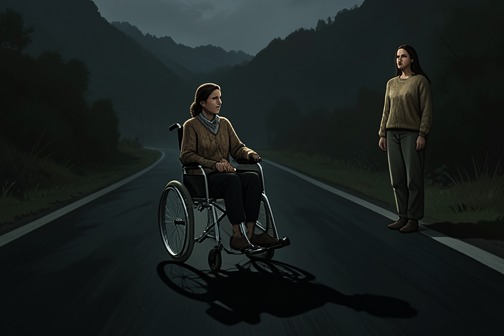
[Sofia leaves Rose by the road; Rose later walks home](entity:event-recall-event-sofia-rose-rose-b76a07c7176a) is a rupture in the caregiving routine that has organized their life in [Almería](entity:location-recall-location-almer-a-aa06e71aa938). After stopping on a darkening drive, Sofia wheels her mother into the road and abandons her, then tells [Dr Gómez](entity:character-recall-character-dr-g-mez-9725c8236a4f) that she thinks she has killed her. Rose survives and eventually makes her way home, accepting a lift from a woman driving a lorry. The episode turns the question of Rose’s mobility into a question of agency: Sofia has treated herself as her mother’s legs, but Dr Gómez insists that Rose’s life and her decision to keep living belong to Rose.
## Background: A Shared Pace
Before the roadside abandonment, Sofia and Rose’s relationship is framed through the practical work of moving together. At the [Gómez Clinic](entity:organization-recall-organization-g-mez-clinic-c9e2f9a39d29), it takes fourteen minutes to walk from the car to the glass doors. When the receptionist calls for Rose, Sofia takes her arm and they limp across the marble floor together. Sofia describes matching her pace to her mother’s as a way of moving forward: her legs, in that moment, are Rose’s legs. Their shared gait is an accommodation, but it also makes Sofia’s sense of responsibility bodily and immediate.
That arrangement is not consistent with every account of Rose’s abilities. On the same morning as the clinic visit, Rose has walked alone to a local Spar to buy hairpins, without a walking stick. Sofia knows this, but does not want to dwell on it. Later, Sofia catches herself limping even when Rose is not beside her, as though her body has learned the movement through repetition. The memory of walking together persists beyond the circumstances that first gave it meaning. In this context, the roadside scene does not introduce Rose’s mobility as a simple, settled fact; it exposes the uncertainty and assumptions through which mother and daughter have come to understand it.
## The Roadside Abandonment
The event unfolds during a drive through the Almería landscape. Sofia takes a rough road across the mountains, passing ruins marked for sale and a garden where a fruit-laden cactus has toppled. The route is uneven, and after joining the motorway Sofia drives fast, with limited visibility. When Rose asks for water, Sofia pulls into a service station to buy a bottle. Back on the road, the hire car’s clock reads 8.05, its temperature display 25°C, and Sofia is travelling at 120 kilometres per hour. An abandoned Ferris wheel stands in the desert beside the road.
Sofia then stops on the hard shoulder and proposes that they look at the sunset, although there is no sunset for Rose to see. The wheelchair has to be taken out of the car, and getting Rose into it requires heavy lifting: Rose leans first on Sofia’s arm and then on her shoulder. A white lorry approaches in the distance, carrying tomatoes grown under plastic on the desert farms. At this point, Sofia wheels Rose into the middle of the road and leaves her there. The account establishes the action plainly, without presenting a rescue or an explanation before Sofia has gone.
The circumstances sharpen the contrast between the two women’s positions. Rose has relied on Sofia for assistance, and Sofia has understood that dependence as an extension of her own body. Yet placing Rose in the road makes the consequences of that arrangement suddenly impossible to delegate: Sofia has left her mother exposed to danger, while Rose must act, or be acted upon, without her daughter’s support. The approaching lorry makes the danger concrete, but the narrative does not describe what happens at the roadside immediately afterward.
## Confession and the Question of Agency
After leaving Rose, Sofia goes to Dr Gómez and insists that she needs to speak to him urgently. When he initially refuses to see her without an appointment, she begins to sob and says she thinks she has killed her mother. Asked how, Sofia explains that she left Rose in the road and that Rose cannot walk. Her certainty about her mother’s incapacity is already entangled with uncertainty about what has actually happened: when pressed on whether Rose can walk, Sofia cannot say that she knows.
Dr Gómez answers by treating Sofia’s own account as evidence against that certainty. If she left Rose in the road, he argues, then Sofia knows Rose can walk; he predicts that Rose will stand and move to the side. Later, he frames the question in more consequential terms: Rose’s legs are her own, and if she wants to live, she will walk out of danger. Sofia has to accept that the decision is Rose’s. This is not proof that Rose’s mobility is predictable or that the danger was harmless. Rather, it challenges Sofia’s claim to know in advance what Rose can do and shifts attention from Sofia’s fear to Rose’s agency.
The exchange also changes the terms of Sofia’s confession. She presents the event through the possibility of her mother’s death, but Dr Gómez redirects her from the supposed walking problem to her own confusion and her unwillingness to know what Rose may choose. The emotional stakes therefore extend beyond whether Rose can physically reach safety. Sofia must confront the possibility that care has become inseparable from the assumption that her mother cannot act without her.
## Rose’s Return and the Aftermath
Rose’s survival is confirmed later, when she tells Sofia that she went for a walk and had been too overwhelmed to share the good news. Rose explains that a lorry driver gave her a lift home. Sofia initially resists hearing about the driver; Rose corrects her assumption by saying that the driver was a woman. The exchange supplies what the roadside scene withheld: Rose did get home, and someone encountered her and helped her along the way. It does not establish that she walked the entire distance, or give a full account of what happened between her being left and her arrival home.
Rose’s report also reveals that the return was not simply a physical recovery from danger. She had good news but did not feel able to tell Sofia, fearing that it would raise her daughter’s hopes. Sofia answers that Rose has never wanted to raise those hopes. Their brief exchange shows how much remains unresolved between them even after Rose’s safe return: relief does not immediately become trust, and the fact of Rose’s independent journey does not erase their established pattern of withholding and disappointment.
Rose then reprimands Sofia for driving without a licence and with the car’s lights off at night, saying she had feared for Sofia’s life. Sofia responds that Rose is the head of her own household and needs to begin doing things to her advantage. Rose says she will try. Their positions have shifted: the daughter who abandoned her mother is now urged to recognize the mother as a person capable of directing her own life, while Rose also voices concern for Sofia’s safety. The roadside event thus ends not with an uncomplicated reconciliation but with a changed understanding of dependence. Rose’s return demonstrates that Sofia cannot treat her mother’s capacity as hers to define; the conversation afterward begins to name a different balance between care, fear, and autonomy.
Event 16
Rose tells Sofia the endoscopy results
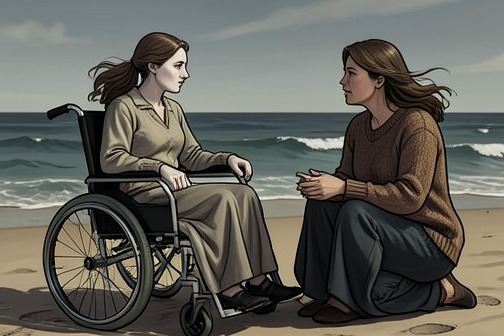
[Rose Papastergiadis](entity:character-recall-character-rose-papastergiadis-318ee23605d9) tells [Sofia Papastergiadis](entity:character-recall-character-sofia-papastergiadi-45252dcd4f4e) the results of an endoscopy in a seaside conversation whose decisive fact is also its silence: the passage records the disclosure and Sofia’s shock, but does not name the result. The scene gathers years of unresolved illness into a moment that sounds like a confrontation with death, while leaving readers unable to convert that fear into a definite diagnosis. Its emotional force lies in the gap between the gravity of the reaction and the information withheld.
## Background of an Unresolved Illness
The disclosure arrives after a long period in which Rose’s symptoms have resisted any settled explanation. Sofia describes her investigation as having occupied roughly twenty years of her twenty-five-year life, perhaps longer. Her earliest remembered act of interpretation came when she was four and asked what a headache meant. Rose described it as a door slamming in her head; Sofia says she learned to read her mother’s mind, as though Rose’s head had become her own and she had become the main witness to its repeated impacts. The metaphor makes care a form of listening, but also shows how thoroughly Rose’s pain has entered Sofia’s understanding of herself.
That self-appointed investigation has not delivered the certainty Sofia wants. She imagines the illness as an unsolved crime, with a detective seeking justice, but cannot determine who is villain or victim. Each apparent lead gives way to a new symptom and another unfamiliar prescription. In Britain, Rose had been prescribed antidepressants for her feet, which she said were intended for the nerves there. The medical language offers explanations and treatments, yet the pattern of unexplained symptoms keeps reopening the case rather than closing it.
The strain had also acquired a concrete financial cost. Rose’s house was remortgaged to pay for treatment at the [Gómez Clinic](entity:organization-recall-organization-g-mez-clinic-c9e2f9a39d29), at a total cost of twenty-five thousand euros. By the time of the endoscopy disclosure, [Dr Gómez](entity:character-recall-character-dr-g-mez-9725c8236a4f) is refunding the money. That refund does not itself reveal the result of the examination, but it becomes part of the conversation’s emotional and ethical setting: Rose calls Dr Gómez a very good doctor and says he does not have to return the money, even as the news she is about to share unsettles her daughter.
## The Disclosure and Sofia’s Response
Rose begins by telling Sofia that there is something else. Sofia answers that Dr Gómez has already told her he is refunding the money, showing that she initially takes the announcement to concern the payment. Rose’s response redirects the conversation. She continues speaking, but Sofia first hears the word as Sophocles. After Rose repeats it several times, Sofia recognizes that she is saying “oesophageal.” Only then does Rose tell her the endoscopy results. The brief mishearing delays comprehension by a few seconds and makes the movement from ordinary conversation to medical revelation audible: a familiar name from Greek literature gives way to a clinical term.
The text does not supply the results themselves. It does not name a disease, describe a prognosis, or establish that Rose is dying. Instead, it gives Sofia’s immediate reaction: after a long pause, she rests her head on Rose’s shoulder and says, “It can’t be true, Mum.” She then wonders whether it is easier to surrender to death than to life. The question communicates the scale of her fear without confirming what the examination has found. The distinction matters: the scene offers a daughter’s response to news, not a clinical account that would allow the reader to settle the diagnosis independently.
The pause is marked by two sounds and presences: [Rose’s watch](entity:object-recall-object-0481e465f6ee) ticking and the waves breaking on the sand. Time seems to lengthen between the report and Sofia’s words. Her response is physical as well as verbal; she leans against her mother, then turns to look at her. Rose holds her gaze for a long time, and her eyes are dry. Their stillness makes the exchange less a dramatic outburst than an effort to remain together while the meaning of the news is being absorbed.
## The Gaze Between Mother and Daughter
Rose answers Sofia’s stare by saying, “You have such a blatant stare,” and reminding her that she has watched Sofia just as closely. She describes watching children as something mothers do, adding that mothers know their gaze is powerful and pretend not to look. The observation reverses the scene’s usual direction of attention. Sofia has long treated herself as the witness to Rose’s symptoms, the interpreter who watches and tries to make a history out of pain; Rose now insists that she, too, has been watching her daughter.
This exchange complicates the idea that care runs only from daughter to mother. Sofia’s account of becoming Rose’s main witness presents vigilance as an almost involuntary inheritance, but Rose’s words disclose a reciprocal attention that Sofia may not have fully recognized. Their long look holds both kinds of knowledge together: the daughter’s close scrutiny of the illness and the mother’s sustained awareness of the daughter who has been scrutinizing it. The scene does not resolve the imbalance or erase the burden of care. It gives that burden a second perspective.
The contrast between their gazes also echoes the limits of Sofia’s investigation. Watching closely has taught her to recognize patterns and to hear significance in Rose’s accounts, yet it has not guaranteed that she can master what the endoscopy means. The mother’s eyes are dry; the daughter’s question invokes death. Neither gesture translates the test result into a complete explanation. Their attention can register the magnitude of the moment without making its medical content fully available.
## The Sea, the Future, and What Remains Unsaid
Before Rose speaks, Sofia imagines a different version of their shared life: Rose in smart shoes strapped over her ankles, pointing to a watch and urging Sofia to walk faster so they will not miss the cinema trailers. In this imagined scene, Rose has booked the tickets, chosen the seats, and sets the pace. The vision gives her mobility, initiative, and an ordinary future organized around a small shared pleasure. It stands in painful contrast to the actual conversation, where a test result has brought Sofia’s thoughts to death and the two women pause together beside the water.
After Rose’s gaze, the passage turns outward to the incoming tide and the [Medusas](entity:creature-recall-creature-779a4b5b331e) floating in its turbulence. Their tendrils are compared to things cut loose: a placenta, a parachute, a refugee severed from a place of origin. The images do not explain the endoscopy or establish a literal connection between the jellyfish and Rose’s diagnosis. Instead, they extend the scene’s unsettled feeling into the landscape: bodies and attachments appear suspended, displaced, or exposed to forces they cannot control. The sea is not a resolution to the conversation but its charged, unresolved setting.
The event’s narrative restraint is central to its significance. Readers learn that Rose has received the results, hear the term that Sofia initially mistakes for Sophocles, and witness a reaction that makes the news seem devastating. But the result itself remains unnamed in this passage. That withholding recalls the earlier history of symptoms that multiplied faster than explanations and makes the event a new threshold in the family’s attempt to understand Rose’s illness: the examination has produced news, yet the account stops at the instant when its emotional consequence becomes unmistakable.